












In the demanding world of Japanese cuisine, your equipment represents a considerable investment. Rice-rolling machines, rice washers, gyoza-making machines… These sophisticated tools are at the heart of your production. Yet many restaurant owners neglect their regular maintenance, leaving themselves vulnerable to costly breakdowns and service disruptions. The preventive maintenance is not an option: it is a strategic necessity.
The economic implications of preventive maintenance
A equipment A machine that is not properly maintained may see its service life reduced by 40% to 60%. For machines that represent a significant investment, such neglect results in a major financial loss. Conversely, a well-maintained machine with a structured maintenance programme can extend its service life by 5 to 10 years.
The hidden costs associated with poor machine maintenance should not be overlooked. In addition to the maintenance costs, it can lead to a loss of turnover and reputation if your machine breaks down whilst in operation or during a busy period. It is worth noting that an emergency repair is generally more expensive than a scheduled maintenance.
Technical specifications of equipment for Japanese cuisine
The machines used in the Japanese cuisine have unique characteristics that reflect the expertise behind this cuisine and therefore require a specific approach. Take the rice washer, for example RM401AGCE, it uses filtration systems that can become clogged quickly if the water used contains impurities, such as limescale. These impurities build up in the system and gradually reduce the machine’s cleaning performance.
Another example: the Gyoza machines. These feature special mechanisms designed not only to measure out the filling but also to fill the gyoza correctly. These mechanical components require regular lubrication with suitable products food safety standards. Using unsuitable ingredients can not only affect the quality of the food but also damage the robot’s mechanisms.
Optimal Maintenance Programme
Daily checks
Before and after each use, it is essential to check visually the condition of the machine. This check focuses in particular on surfaces that come into contact with food, potential leaks and basic functions. This simple routine helps to detect 70%: emerging issues and thus minimise the risk of breakdowns.
This daily check is also supplemented by the cleaning machinery. This step must not be overlooked, as it removes residues that could impair the proper functioning of machine components, such as sensors.
Weekly maintenance
This maintenance results in a full wash filters, but also the verification of cooking settings, for example. This is also the time to carry out a light descaling of appliances that use water.
Monthly presentations
This work is also carried out by your teams, but in more detail. This involves checking the electrical components and hydraulic circuits, as well as inspecting moving parts. If your machines have built-in software, this is also the ideal time to carry out any updates.
Annual reviews
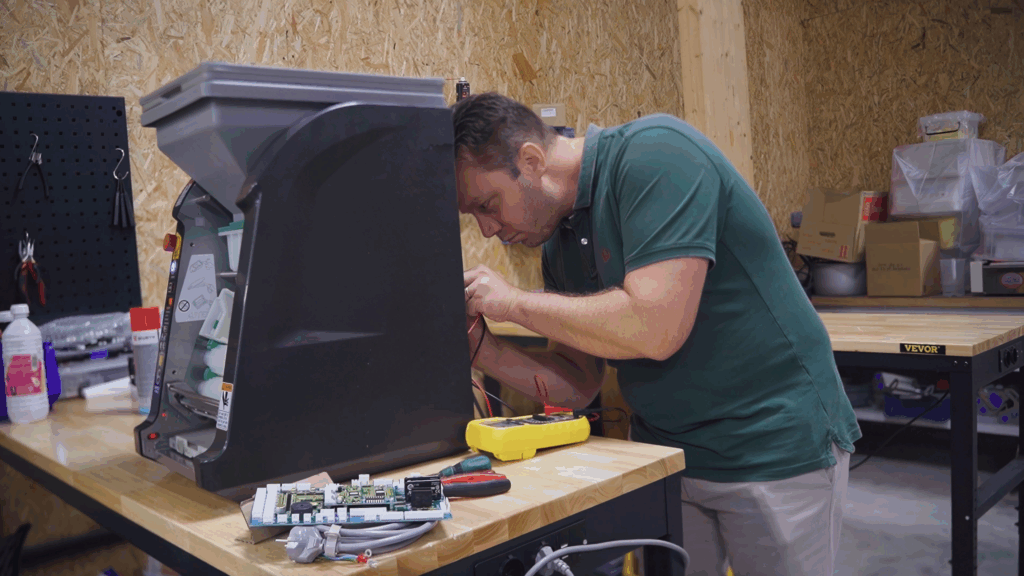
For this revision, please contact our specialist technicians to carry out a full inspection. This enables you not only to plan ahead for the replacement of worn parts, but also to optimise the settings in line with changes in your business.
Key performance indicators to monitor
If there is a problem with your machine, there are several warning signs to look out for. One operating time longer than usual, loss of quality the products on offer, but also a electricity consumption abnormally high.
To take account of these changes, a logbook can prove very useful. It will enable you to record operating hours, maintenance work already carried out on the machinery, etc. This data is a wealth of information for optimising the maintenance programme.
Staff training: a worthwhile investment
Your team members are the first to notice whether your equipment is damaged or not. The provide training in maintenance procedures Basic maintenance requires a smaller investment but delivers significant returns on the investment in the equipment. A cook who can spot the early warning signs of a breakdown will save you money on repairs.
To do this, you could organise short but regular sessions to focus on the essential procedures : cleaning, visual inspection, emergency shutdown procedure. Your teams are empowered to take responsibility and ensure the safety of your production.
The increasing complexity of modern Japanese equipment makes it essential to call on specialist technicians. Choose a partner who knows your machinery inside out and can respond quickly. A maintenance contract with Sushi Robots guarantees you the necessary expertise and access to genuine spare parts.
La preventive maintenance turns your equipment into true partners in your success. This proactive approach safeguards your investment, optimises your operating costs and ensures consistent production. In an industry where quality is non-negotiable, this is the key to your long-term success.